I’m a Teacher
Quick, engaging resources for your classroom.
- Games and interactive activities
- Ready-to-use printables
- Dinosaur unit ideas
- No prep. Just fun and learning.
Same curious kids. Bigger discoveries.
Explore Teacher ResourcesTurn a dinosaur obsession into a day of learning.
Be a Dinosaur is a free, kid-friendly collection of dinosaur games, activities, and resources for classrooms, homeschools, and curious families.
Learning for kids who can’t get enough dinosaurs.
Always free • No account needed • Preschool to 5th grade
Quick, engaging resources for your classroom.
Same curious kids. Bigger discoveries.
Explore Teacher ResourcesEasy ideas, activities and printables for homeschool families and curious kids.
Big imaginations belong here.
Explore Family Resources
Find activities that fit your kids or students. Ages are a friendly guide, not a rule: follow your dinosaur fan’s lead.
Counting, colors, first sounds, puzzles and plenty of stomping.
Letter sounds, first words, adding and taking away.
Spelling, reading, multiplication and trickier logic.
Activities that work well for siblings, homeschool groups, or mixed-age classrooms.
Older dinosaur fans? There are 4th grade games and 5th grade games too.
Dinosaur classroom activities you can put on the board in the next five minutes.
No student accounts, no logins, nothing to install. Add Be a Dinosaur to Google Classroom.
Dinosaur homeschool activities, rainy-day rescues and screen time you can feel good about.
Teaching several kids at once? Tap My Grade at the top of any page and the games adjust to each child.
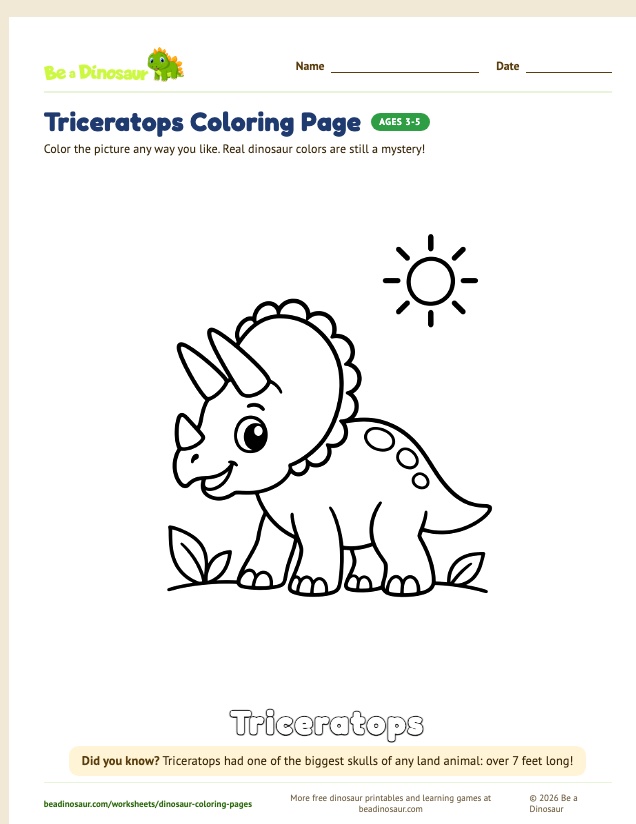 Dinosaur Coloring Pages
62 pages, easy to detailed
Dinosaur Coloring Pages
62 pages, easy to detailed
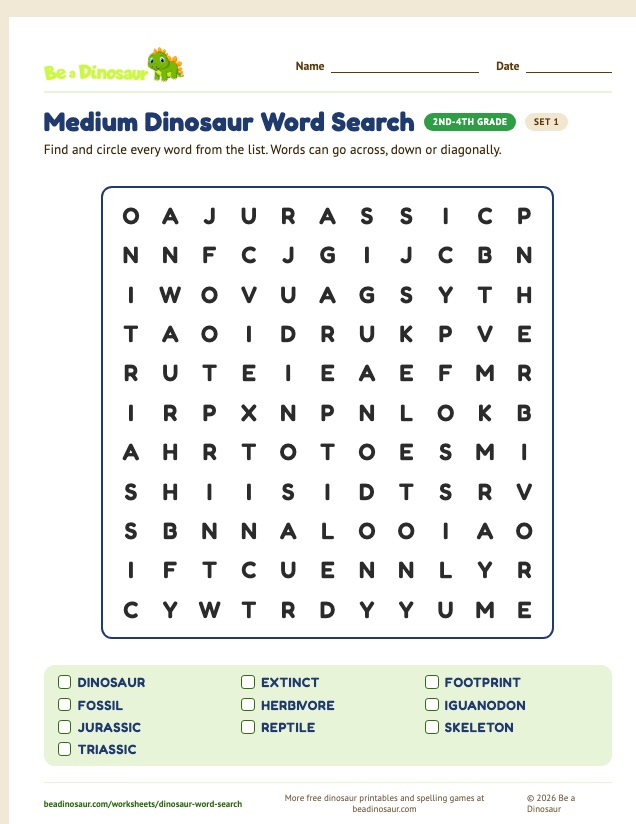 Dinosaur Word Searches
3 levels, answer keys
Dinosaur Word Searches
3 levels, answer keys
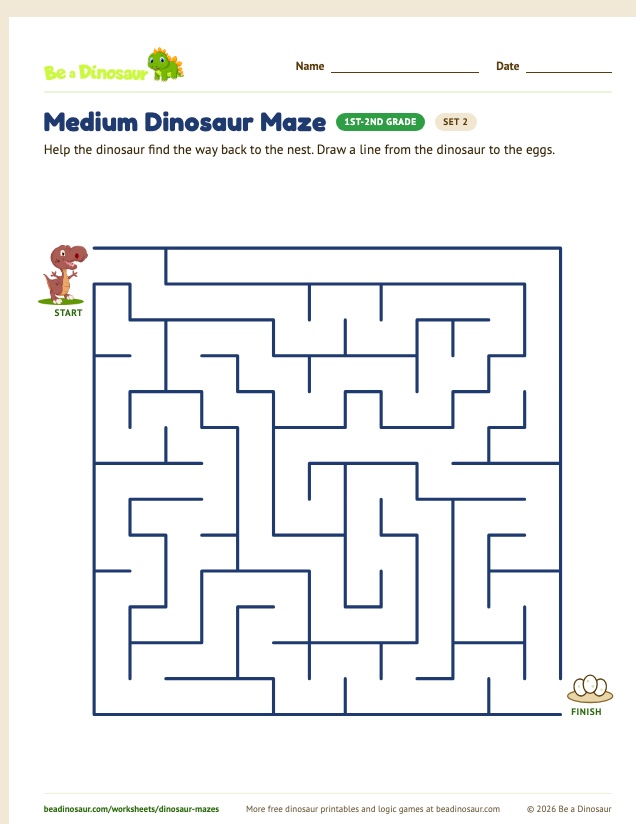 Dinosaur Mazes
Easy to tricky, with solutions
Dinosaur Mazes
Easy to tricky, with solutions
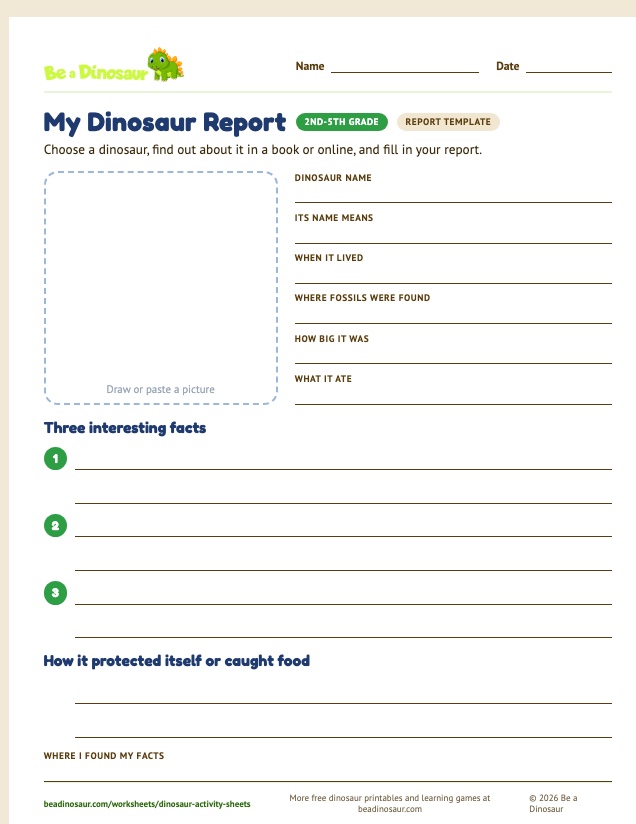 Dinosaur Activity Sheets
Tracing, scrambles, matching, reports
Dinosaur Activity Sheets
Tracing, scrambles, matching, reports
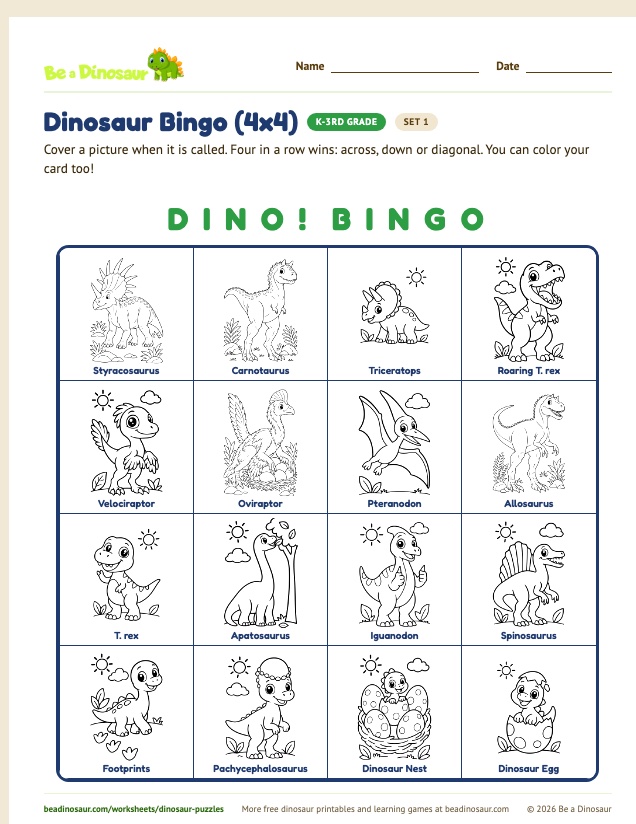 Dinosaur Puzzles & Games
Bingo, crosswords, secret codes, story pages
Dinosaur Puzzles & Games
Bingo, crosswords, secret codes, story pages
Need skills practice too? There are free math worksheets and reading and phonics worksheets, all with answer keys.
Three ready-made plans. Times are suggestions: stretch the parts your kids love and skip what doesn’t fit.
You’ll need: A screen, a few toy dinosaurs, play dough
Everyone picks a dinosaur and moves like it: stomp like a T. rex, stretch tall like a Brachiosaurus. Ask: was your dinosaur a plant-eater or a meat-eater? Meet the dinosaurs →
Put the dinosaur back together in the Dino Puzzle, or count dinosaurs in Which is More. Take turns or play on the big screen. Play the Dino Puzzle →
Press toy dinosaur feet into play dough and guess who made which footprints. See the hands-on ideas →
Each child finishes the sentence “Today I learned that dinosaurs…”. Send a dinosaur coloring page home for later. Print a dinosaur coloring page →
You’ll need: A screen, a printer, string or sidewalk chalk, a tape measure
Read three dinosaur fact cards out loud, vote for a favorite and tally the votes on the board. Dinosaur fact cards →
Younger kids: Counting or Which is More. Older kids: Find the Changes or Word Scramble. Every game adjusts to the grade you pick. Browse all the games →
Mark out 40 feet with string or chalk. How many kids long is a T. rex? Estimate first, then check. How to run it →
Hand out a dinosaur word search or maze, or pick a worksheet that matches what you are working on: counting, addition, phonics or spelling. Free dinosaur printables →
Clap the syllables in dinosaur names: Tri-cer-a-tops! Steg-o-saur-us! Who has the longest name?
You’ll need: A dinosaur book, flour + salt, toy dinosaurs, string, a printer, a screen
Read any dinosaur book from your shelf or library together, then play Reading or See the Word. Older kids write down three facts they heard. Reading games →
Go through the dinosaur fact cards, then sort toy dinosaurs: plant-eaters and meat-eaters, two legs and four legs, big and small. Dinosaur fact cards →
Herbivore snack time (anything leafy or crunchy), then a dinosaur parade around the room or yard.
Make salt-dough fossils, then color a dinosaur page while they dry. Salt-dough fossil recipe →
Measure a T. rex outside, then settle back in with a math worksheet or two. Math worksheets →
Kids choose their own games, or start a My Dinosaur Report about their favorite, while you catch your breath. Dinosaur report template →
Simple creative activities using everyday supplies. No special kits, no laminating.
Grab: 1 cup flour, ½ cup salt, ½ cup water, toy dinosaurs, shells or leaves
Mix the dough, roll it into balls and flatten them. Press in a toy dinosaur foot, a shell or a leaf, then lift it out carefully. Let the fossils air-dry for a day or two, or bake them low and slow (250°F) until hard.
They’re learning: How real fossils form, and lots of fine-motor practice.
Grab: Small toy dinosaurs, balloons or cups, water, salt, spoons, droppers
Freeze a toy dinosaur in water overnight (inside a balloon makes an egg shape). Peel off the balloon and let kids free the dinosaur with warm water, salt and spoons.
They’re learning: Melting and freezing, prediction (“what will work fastest?”) and patience.
Grab: String or sidewalk chalk, a tape measure, open space
A T. rex grew up to about 40 feet long. Measure it out in a hallway, driveway or playground, then find out how many kids lying head-to-toe it takes to match it.
They’re learning: Measuring, estimating and comparing sizes.
Grab: Toy dinosaurs, play dough or washable paint, paper
One child walks a toy dinosaur through play dough or paint while the others look away. Can the detectives work out which dinosaur made the tracks, and which way it was going?
They’re learning: Observing closely and making a good guess from evidence, just like scientists do with real trackways.
Grab: A pile of toy dinosaurs or dinosaur pictures
Sort the pile different ways: two legs or four, horns or no horns, plant-eater or meat-eater, smallest to biggest. Older kids can count each group and draw a bar graph.
They’re learning: Classifying, counting and early graphing.
Grab: A sandbox or a bin of sand or rice, craft sticks or dry pasta “bones”, paintbrushes, spoons, string
Bury the bones, lay string across the top to make a grid, and dig slowly with spoons and brushes. Draw each find on a paper map of the grid before lifting it out.
They’re learning: How paleontologists really work: slowly, carefully and keeping records.
Quick dinosaur facts for kids, starring the Be a Dinosaur crew. Read them out loud, then try saying the names together.
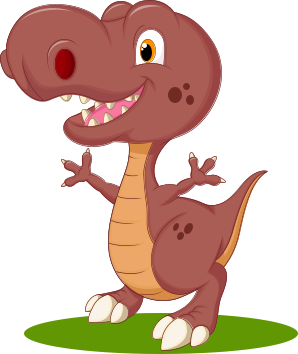
tie-RAN-oh-SORE-us · “tyrant lizard king”
Its biggest teeth were as long as a banana.

try-SAIR-uh-tops · “three-horned face”
It lived at the same time and place as T. rex, and its skull could be over 7 feet long.
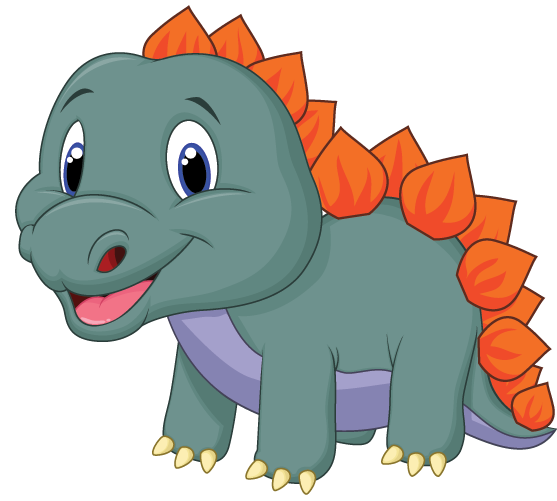
STEG-oh-SORE-us · “roof lizard”
Stegosaurus never met T. rex. More time separates those two than separates T. rex from us!
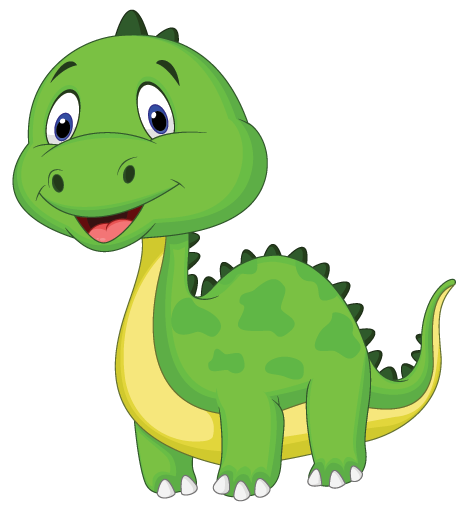
BRAK-ee-oh-SORE-us · “arm lizard”
Its front legs were longer than its back legs, so it could reach leaves higher than a three-story building.
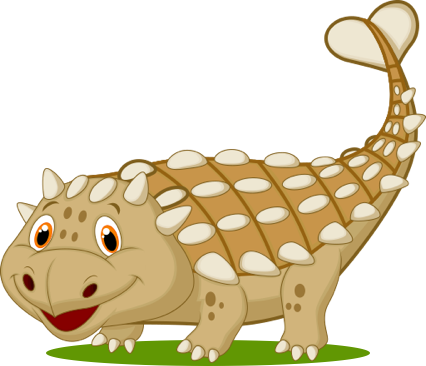
an-KIE-loh-SORE-us · “fused lizard”
It was covered in bony armor and swung a heavy club on the end of its tail.

PAIR-uh-sore-OL-uh-fus · “near crested lizard”
The long crest on its head was hollow. Scientists think it worked like a trumpet.

veh-LOSS-ih-RAP-tor · “swift thief”
The real one was only about as big as a turkey, and it had feathers.
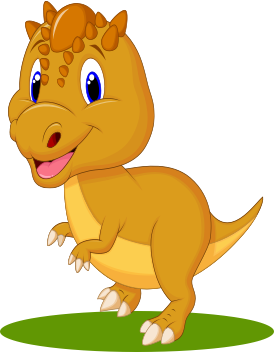
PAK-ee-SEF-uh-loh-SORE-us · “thick-headed lizard”
The dome of bone on top of its head was up to 10 inches thick.
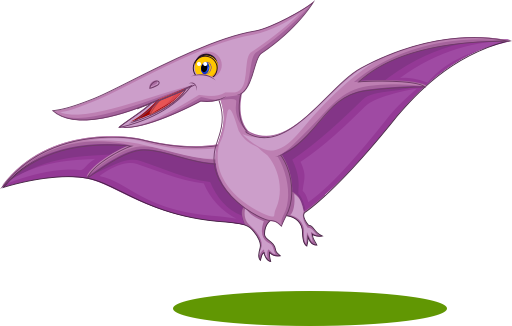
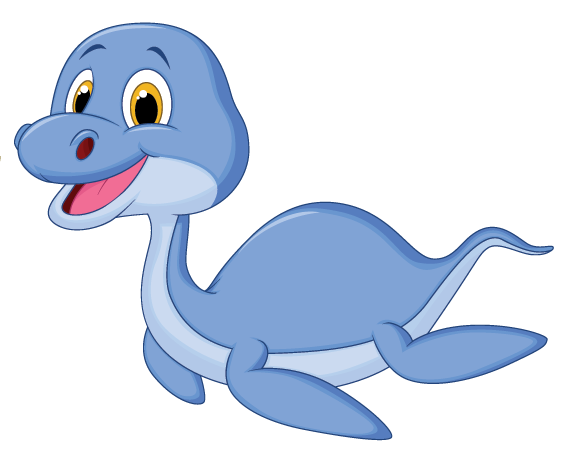
Surprise: not everyone in our crew is a dinosaur! Flying reptiles like Pteranodon and swimming reptiles like plesiosaurs lived at the same time, but scientists put them in their own groups. The dinosaurs’ closest living relatives? Birds.

Everything here is free, and nobody needs an account. Pick a game and let your dinosaur fan lead the way.
Curious kids make a brighter tomorrow.